
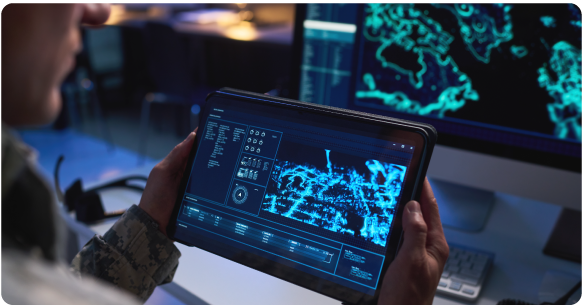
Modern Battlefield Data
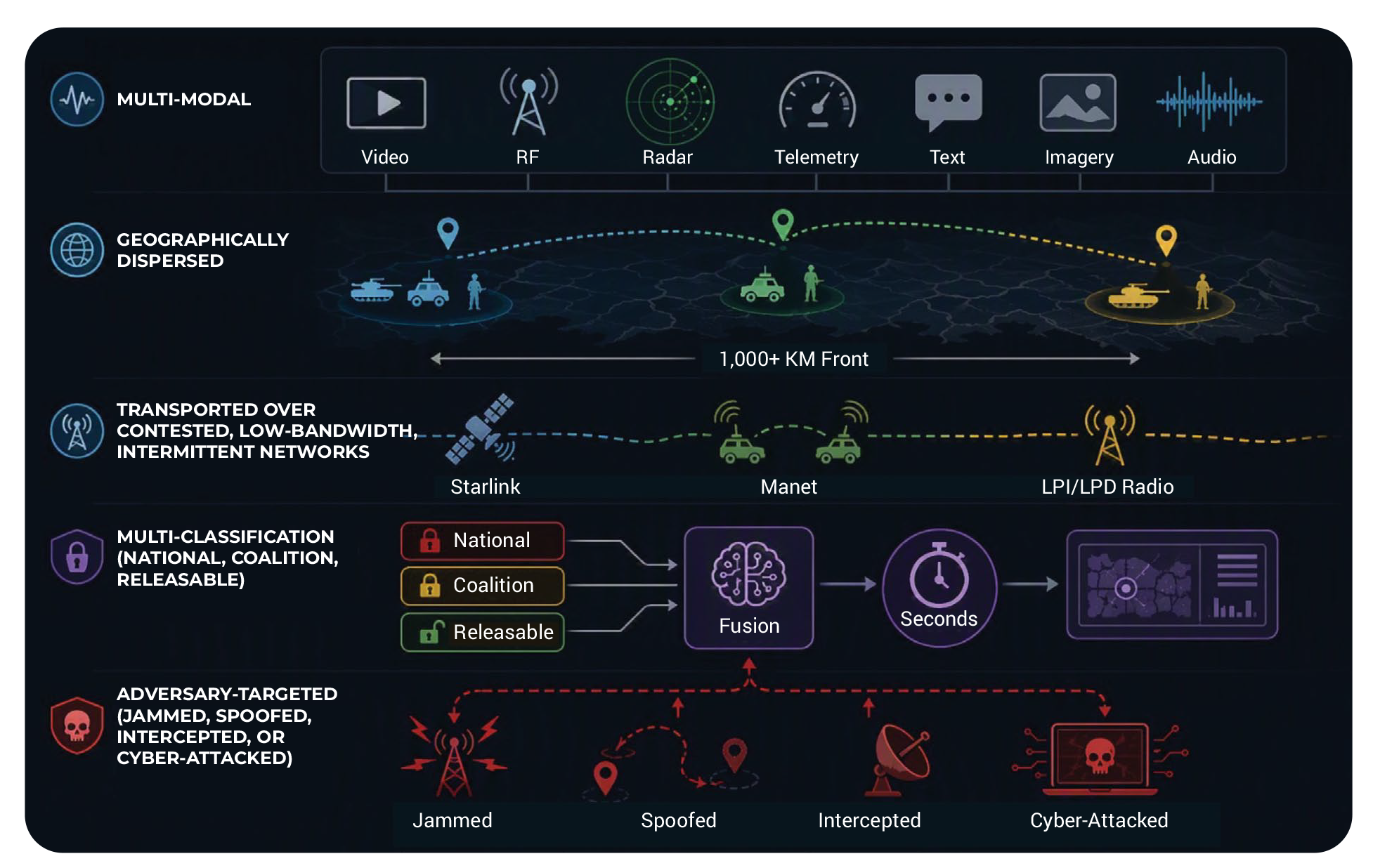
The real challenge is not the raw volume. The challenge is turning vast amounts of diverse, distributed, and constantly changing information into a coherent operational picture.
Accelerating the OODA Loop with AI
Decisions have to be made as quickly as possible. Artificial Intelligence, operating as a force multiplier across the entire OODA (Observe-Orient-Decide-Act) loop, but also classic Automation and Analytics, are the only practical way for addressing it. They combine network operations, data fusion, and human oversight to improve battlefield survivability, and deliver information dominance in contested environments.
Automation and Machine Learning
Despite the excitement around generative AI, many OT and critical infrastructure challenges are still best solved using traditional machine learning techniques. In operational environments, the objective is often detecting anomalies, predicting failures, classifying events and identifying trends. These tasks frequently do not require an LLM.
Decision-making on the modern battlefield requires real-time information to be made available when and where it is required. IP, Packet, and Optical networking provides both the agility to link the data generated from various sources to multiple destinations as well as the capacity required to transport bulk data over long distances with ultra-low latency.
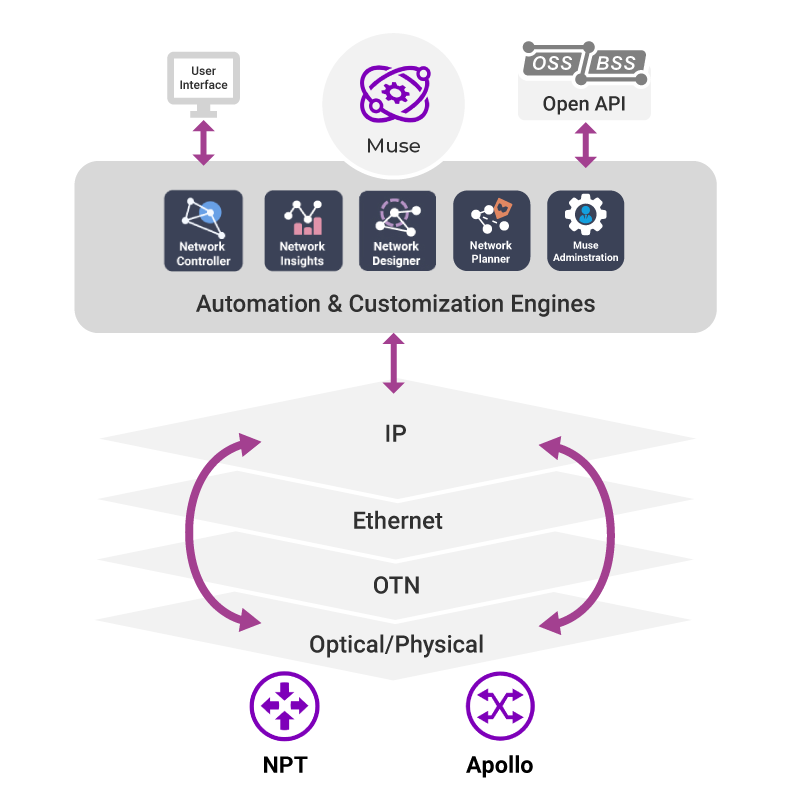
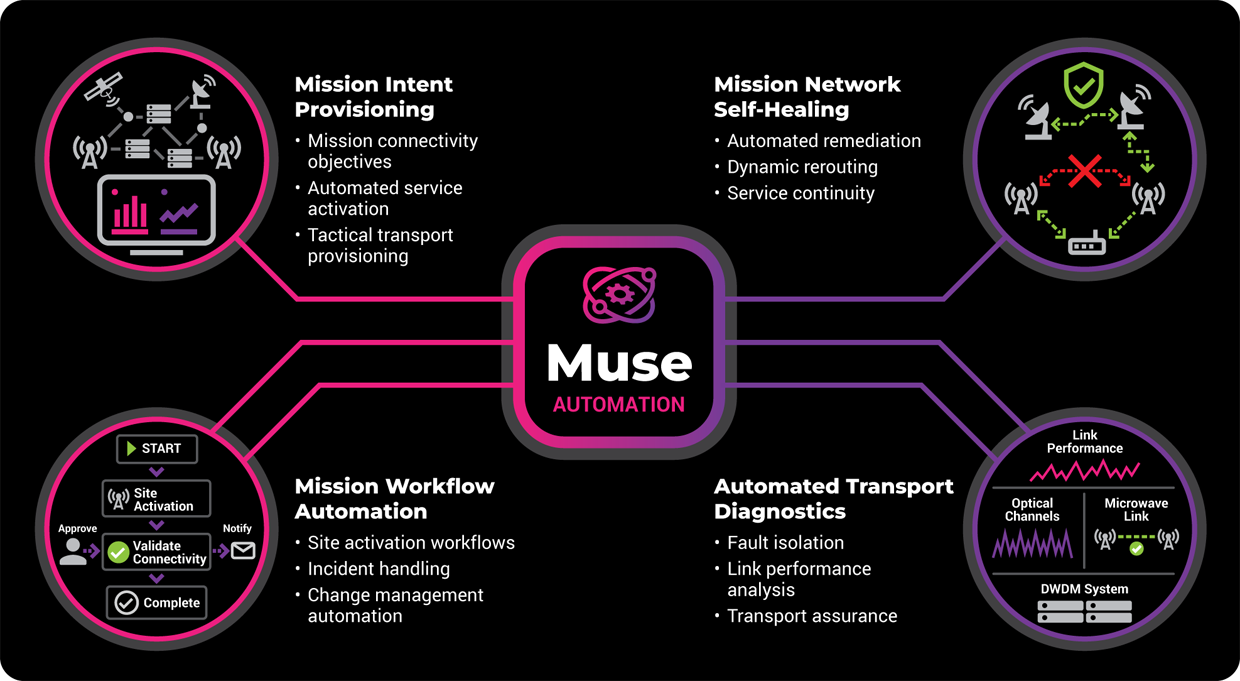
Our Muse Multilayer Automation Platform enables control/analysis/design/planning plus low-code automation and customization.
Muse Automation
- Advanced Workflow Automations allow for the execution of a series of tasks and processes within the network in a specified order. Users can establish triggers and schedules to initiate the execution of these workflows.
- Intent-based provisioning facilitates the efficient and targeted development of service templates, allowing for the clear definition of standard service configurations, key performance indicators (KPIs), topology limitations, and assurance techniques.
- Closed loop automation facilitates the automatic validation of service KPIs through established assurance tests. Additionally, it allows for self-healing in the event of SLA breaches by recalculating service paths across multiple layers.
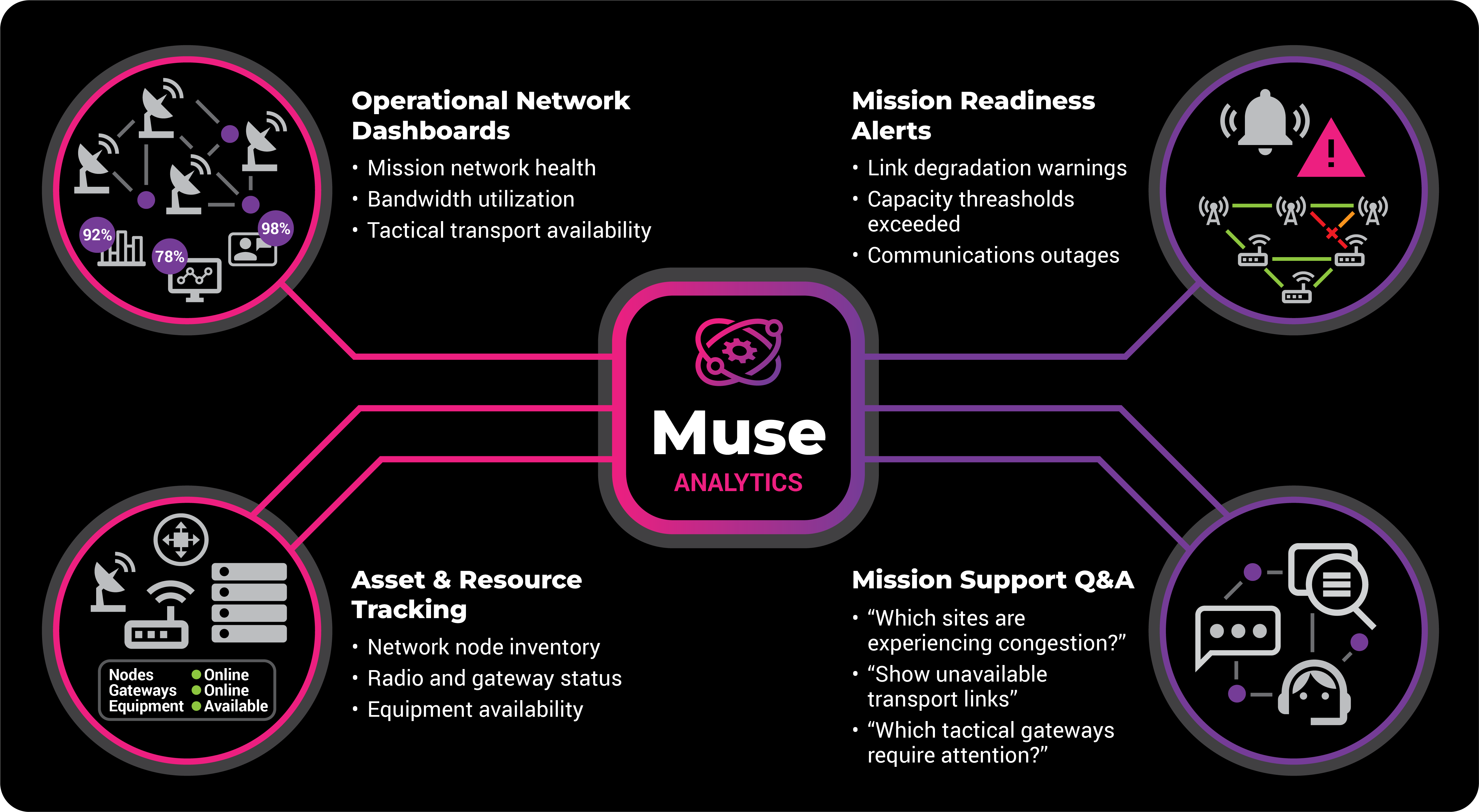
Muse Analytics
- Advanced analytical insights and capabilities are powered by an innovative Business Intelligence (BI) engine that evaluates both physical and logical inventory, performance, utilization, and various key performance indicators.
- Users can export analytics reports, identify network trends, and integrate data into automation systems.
- These insights and analytics tools help identify network challenges, provide solutions to service inquiries, and enhance the efficiency of your Network Operations Center.
AI Applications for Defense Networks
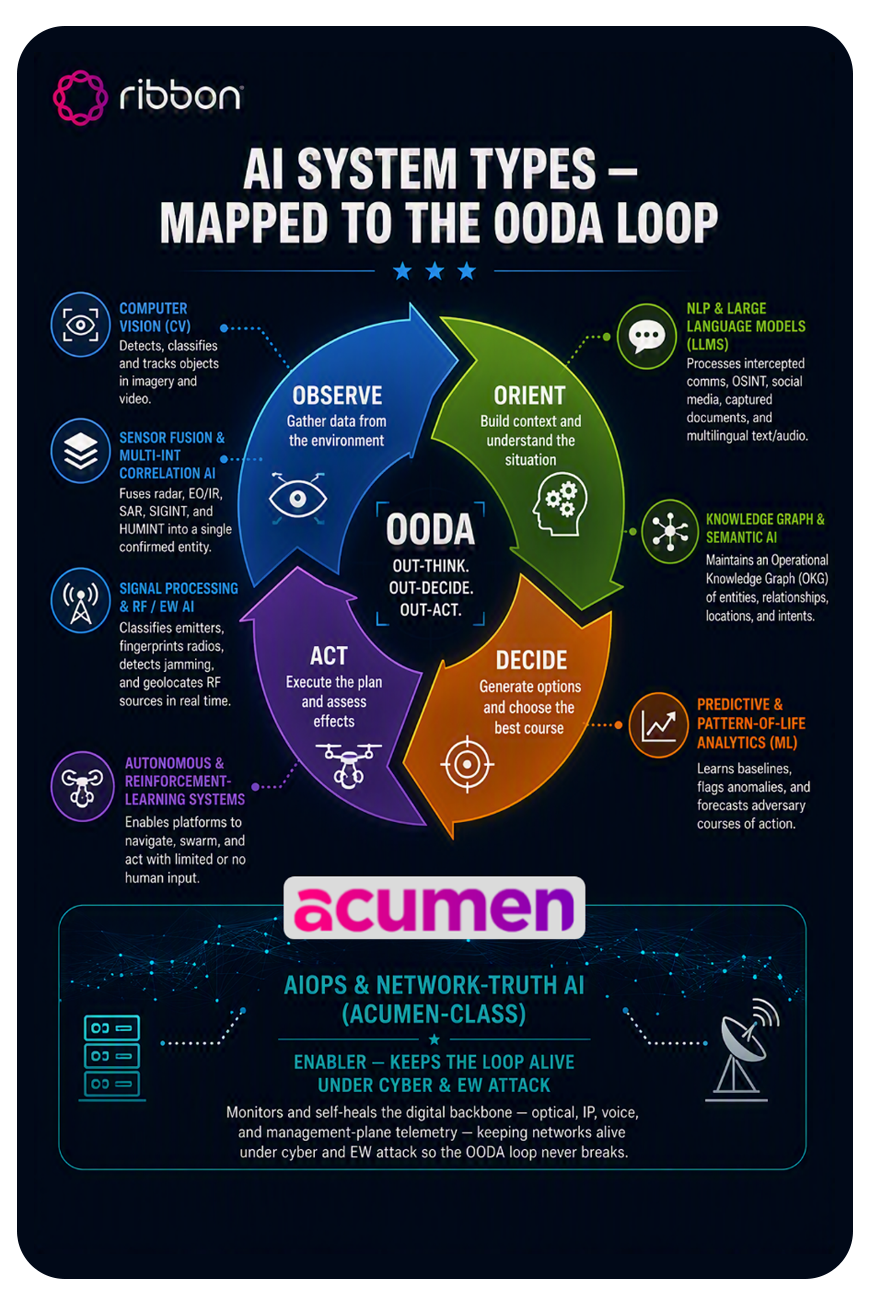
Over the last ten years, the volume, velocity, and variety of data generated in and around the battlespace has grown by roughly two to three orders of magnitude (100×–1,000×), while human cognitive bandwidth has remained flat. This fundamentally changed what it means to “sense, make sense, and act.” In a peer-conflict theater, the estimated total data processed per day from sources such as drones, satellite output, SIGINT systems, and SATCOM traffic ranges from several hundred terabytes to roughly one petabyte per day, and is growing rapidly.
In the infographic alongside, seven AI families run the OODA loop: three to Observe, two to Orient, one to Decide, one to Act. The eighth, AIOps/Network-Truth AI, keeps the loop from breaking under attack.
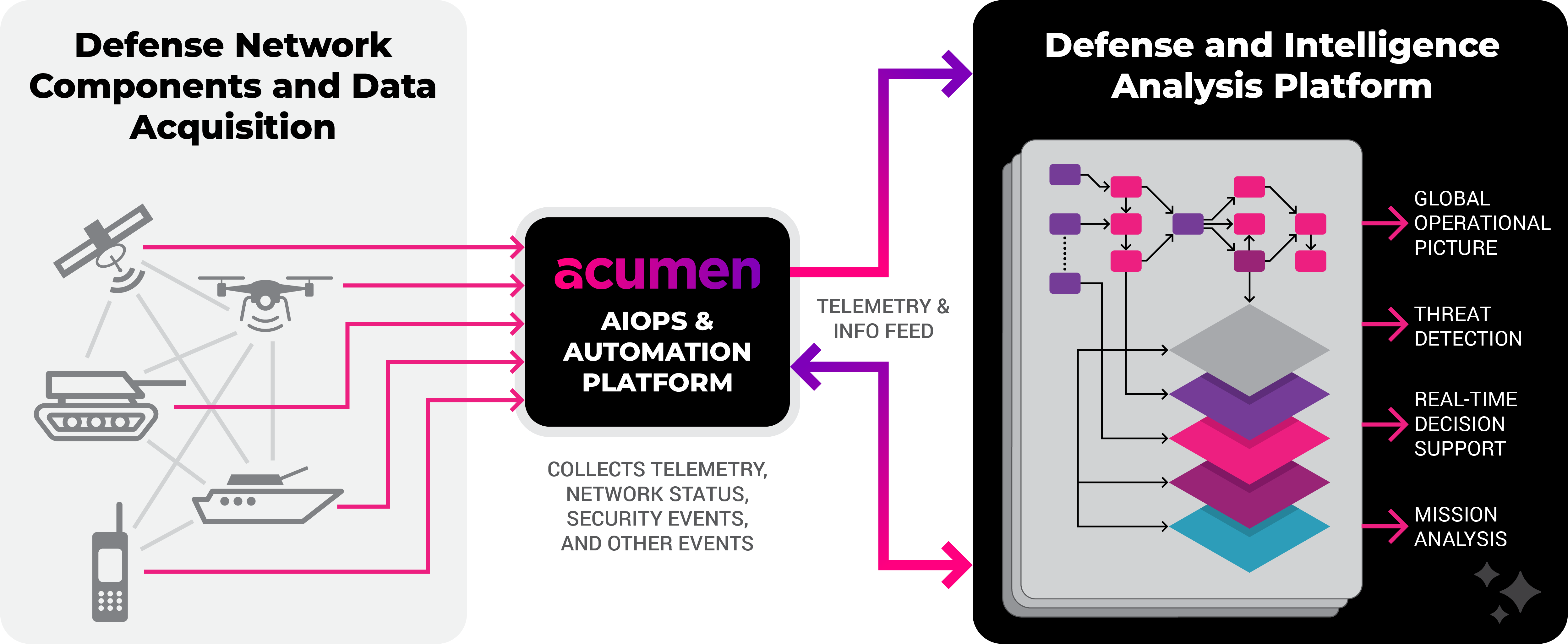
Ribbon Acumen - AIOps Platform
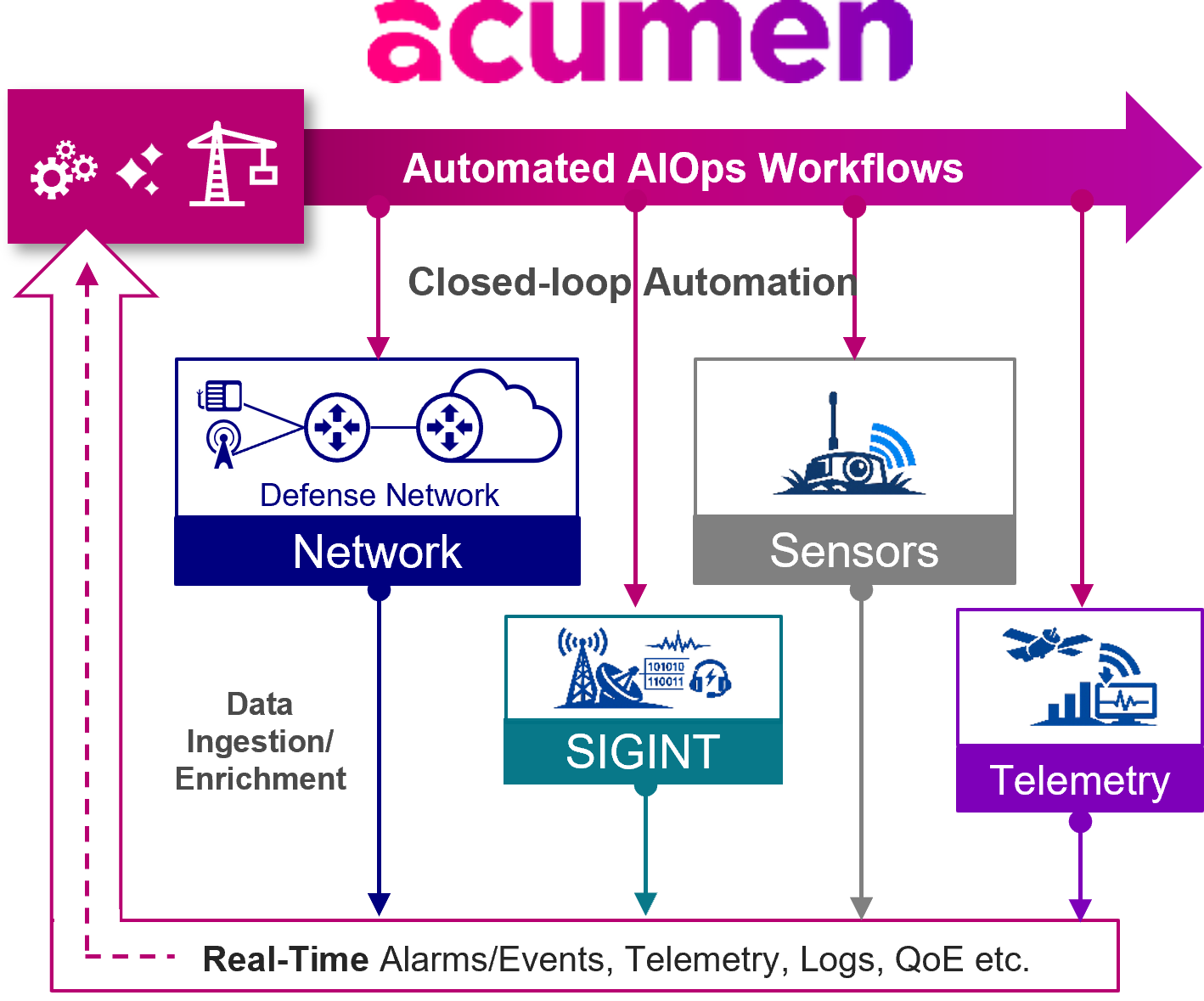
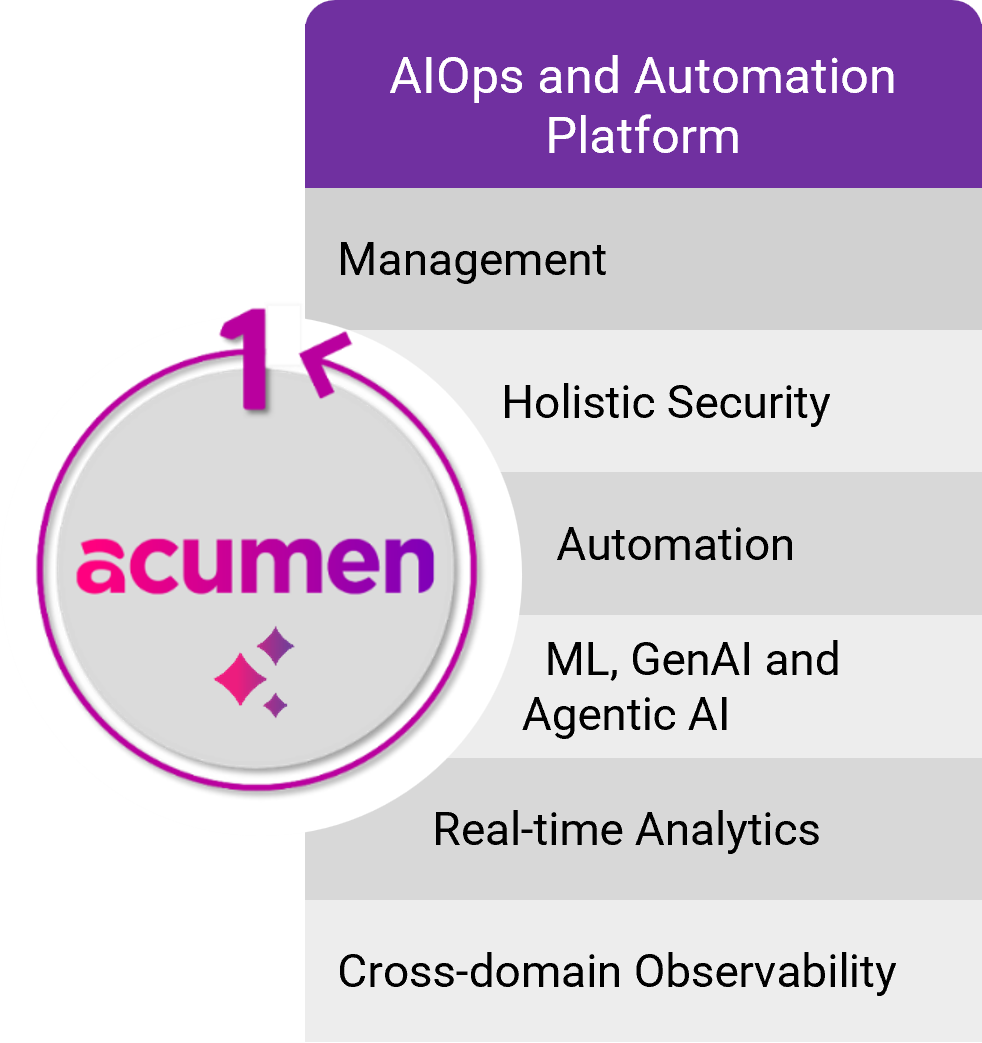
Ribbon Acumen, an AIOps & Automation platform for voice and data networks, fits right in there. It's comprised of a series of ready-made applications and a Builder capability to combine those applications with AI to create custom workflows. Those workflows can analyze and react to data from devices and applications, enabling Acumen to automate network deployment and operations, as well as provide tools to rapidly resolve issues.
AIOps platforms like Acumen ensure the transport layer remains operational and the data is fused before the OODA loop closes against you. Feeding into a Data & Intelligence Analysis Platform (mission-truth), Acumen (network-truth at machine speed) forms the other part of the dual engines of AI-enabled defense networks.
Their combination prioritizes battlefield survivability, enables automated electronic warfare response, and delivers data superiority, the new currency of warfighting.
How to Address the AI Sovereignty Crunch
Defense organizations face an accelerating paradox: AI and cloud computing promise faster, better-informed operations, yet the same networks must protect NATO RESTRICTED traffic, and coalition intelligence that can never simply move to a public hyperscaler. The real question is not “to cloud or not to cloud,” but which workloads belong where — and how a layered, sovereign approach to AI, paired with a deterministic transport fabric, lets security, sovereignty, and AI coexist.
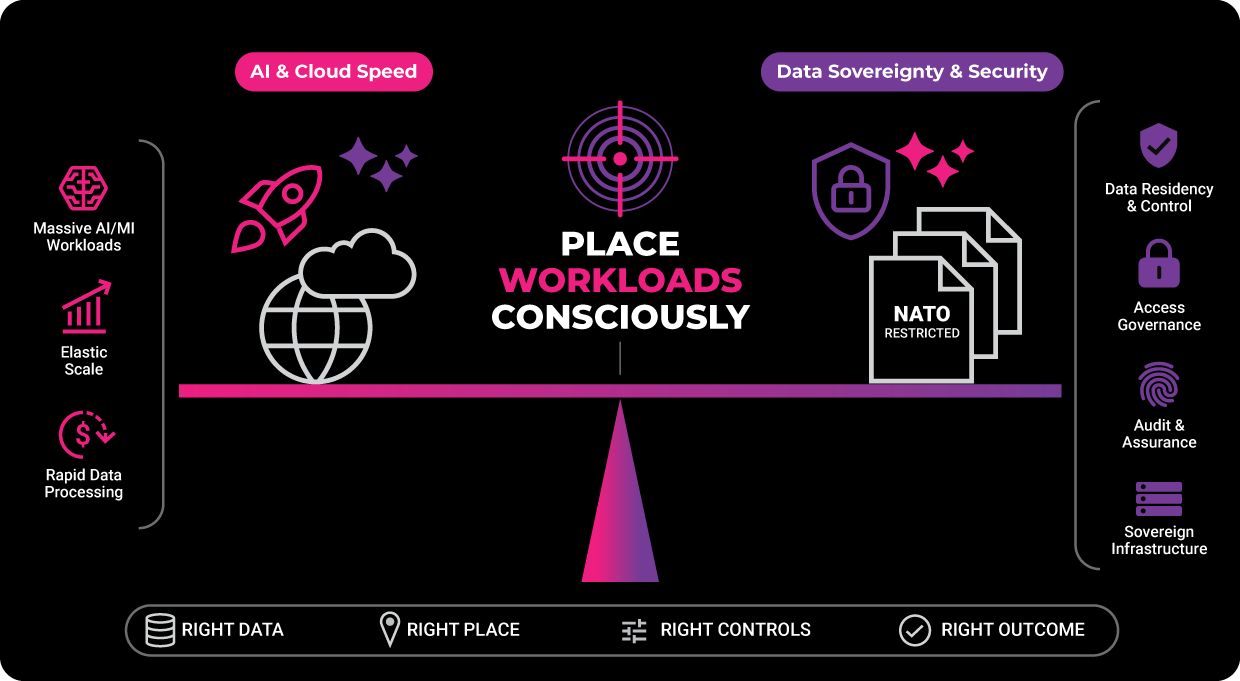
- Sovereignty is more than location. Data sovereignty means knowing where data resides, who can access it, which laws and classifications apply, and maintaining unbroken control — not just where a server sits.
- No single deployment model wins. Public cloud, private cloud, on-premises, and colocation each suit different workloads; most defense organizations need a deliberate mix matched to classification and mission-criticality.
- AI no longer requires the hyperscale cloud. Open-weight LLMs, Small Language Models (SLMs), and classical machine learning now run entirely within sovereign, air-gapped, and disconnected environments.
- Federated learning solves the multi-site problem. Hundreds of bases can jointly improve a shared model by exchanging only model updates — raw operational data never leaves the site.