
Optical Freedom in the Age of AI: Why Thin Transponders Are Reshaping Optical Network Design
AI is driving the next wave of digital transformation, but it is also creating an unexpected challenge for network operators: optical capacity is becoming a strategic bottleneck.
The same AI boom fueling billions of dollars in data center investment is placing unprecedented demand on optical networking infrastructure. New facilities are appearing far beyond traditional hyperscale hubs, traffic patterns are becoming more distributed, and supply chain pressures are making it harder to secure the optical components needed to keep pace. In this environment, traditional single-vendor transport models can limit both flexibility and growth.
Forward-thinking operators are responding with a different approach. By embracing open optical networking, coherent pluggables, and thin transponder architectures, they are gaining the freedom to choose suppliers, optimize deployments, and scale networks faster than ever before. The result is a new era of Optical Freedom—one where openness becomes a competitive advantage and flexibility becomes the foundation for AI-era growth.
The Original Vision of Open Optical Networks
The concept of disaggregated optical networking emerged from a simple industry goal: allowing multiple optical subsystems based on open and standardized interfaces to be combined into complete solutions. This approach promised several important benefits, including best-of-breed innovation, freedom from vendor lock-in, and independent technology evolution across different network layers.
As open networking matured, operators realized that the advantages extended beyond architecture. Open optical networks could reduce capital costs, lower power consumption, simplify network design, and enable more flexible scaling. At the same time, multi-vendor sourcing improved supply chain resilience while multilayer visibility improved operational control.
The Pluggable Revolution Has Arrived
Perhaps the biggest catalyst behind this transition is the rapid advancement of coherent pluggable optics. Historically, high-capacity optical transport relied on large proprietary modules designed for integrated transport platforms. Today, compact pluggable technologies are expanding into higher capacities and longer reaches while maintaining lower power consumption.
Industry projections show pluggable optics representing a significant majority of coherent optical equipment ports throughout the remainder of the decade.
This transformation is creating what many refer to as "optical freedom"—the ability for operators to source optical pluggables from multiple suppliers rather than being tied to a single equipment vendor. Multi-vendor pluggable ecosystems provide flexibility during supply constraints while fostering pricing competition and technology choice.
Enter the Thin Transponder
Thin transponders occupy a middle ground between traditional integrated transport systems and direct router-based coherent networking. Instead of embedding high-power optics inside proprietary transport shelves, thin transponders leverage smaller pluggable coherent optics while maintaining many of the operational benefits of dedicated optical transport platforms.
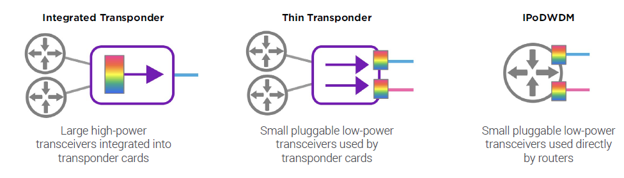
Figure 1 – Optical Transport Solution Architectures
Their appeal lies in flexibility. Thin transponders allow operators to mix and match pluggables based on capacity, reach, cost, and availability requirements. They can be deployed for traffic consolidation, wavelength aggregation, managed wave services, or interface reach extension applications.
Compared with traditional integrated transport platforms, thin transponder solutions are positioned for metro, regional, and long-haul applications while offering lower relative costs and maintaining Layer 1 aggregation and optical operations capabilities.
AI Is Driving New Network Economics
The timing of this transition is closely linked to AI infrastructure growth. AI demand is affecting technology supply chains, with some optical vendors reportedly experiencing delivery timelines extending well into future planning cycles due to intense demand from data center and AI-related deployments.
At the same time, AI inference workloads are increasingly moving beyond hyperscale campuses toward regional and edge locations. While large training clusters remain centralized, inference applications require proximity to users to meet latency objectives. This trend is expected to stimulate growth in regional inference hubs, metro-edge facilities, and distributed compute locations.
This distributed AI model creates new demand for data center interconnect (DCI) networks. As power constraints limit expansion in traditional hyperscale locations, operators and developers are increasingly exploring secondary and emerging markets, creating fresh opportunities for regional connectivity providers.
Open Networks Create New Revenue Opportunities
Open optical architectures are not solely about reducing costs or avoiding supply chain risk. They also create opportunities for new services and business models. Open Line Systems (OLS), intelligent management platforms, alien wavelength services, managed optical fiber offerings, and spectrum leasing models all become easier to support in disaggregated environments.
Hyperscalers in particular increasingly value architectural openness. Open environments enable operators to accommodate customer-owned wavelengths, support diverse equipment ecosystems, and offer more flexible service delivery models without requiring costly network overhauls.
Software Becomes the Force Multiplier
The ability to rapidly provision services, correlate issues across multiple layers, and automate operational workflows can significantly improve time-to-service. In an environment where hyperscale and AI customers expect capacity to be activated quickly, automation becomes both an operational and competitive advantage.
Looking Ahead
The optical industry is entering a new phase where flexibility may become just as important as performance. AI-driven demand growth, constrained supply chains, and increasingly distributed compute architectures are pushing operators toward open ecosystems and diversified sourcing strategies. Thin transponders provide a practical bridge between traditional optical transport and fully converged coherent routing models.
For network operators, the key message is clear: optical freedom is no longer just an architectural preference. It is becoming a strategic design principle that enables supply chain resilience, accelerates service innovation, and creates the agility required to support the next generation of AI-powered infrastructure.
To learn more, check out our recent webinars:
Monetizing the AI Super-Cycle in an Optically Constrained Environment
Can Fibre Keep Up with AI? Rethinking Data Centre Interconnect: